If you can't see this newsletter properly, please click here |
You’re receiving this message as a member of the Greek Scientists Society, the Kinesis Innovation Center or through our collaboration within one or more COST Actions. If you prefer not to receive future updates, you may unsubscribe at the end of this message. |
Easter Wishes, April Updates & Open Invitations
|
|
|
In this edition ...
- Easter Wishes from the GSS Team
Wishing our global community peace, joy, and renewed energy
- COST Actions Strategic Framework · Open Invitation
Join with your Action · Stakeholder Task Force Session · From Mapping to Impact
- 1st Kinesis Innovation Center Community Meeting · Recap & Invitation
Two highlights from the meeting · Join the KIC Community & LinkedIn
- My First Publication · ORE Paper
Physical Activity (PA) and Healthy Ageing & Longevity Data (HAL): Interoperability, Reuse, and Innovation in a Federated European Context
- Κos Σcience Φorum (ΚΣΦ) · Call for Strategic Partners
- Ready to Apply for a Grant application?
Let’s Build Proposals Together Stay tuned for more initiatives and updates in the coming period. |
|
|
09.04.26
Dear ,
As we enter this Easter period, I would like to begin with a warm and heartfelt wish to all of you — whether you are celebrating Western Easter, Orthodox Easter, or simply enjoying the spring bank holidays. May this season bring you peace, joy, renewal, and precious moments with the people who matter most to you.
Thank you for being part of our growing community and for supporting initiatives that connect science, innovation, and societal impact.
With this shared purpose in mind, over the coming period, we continue to advance a small number of interconnected initiatives across the Greek Scientists Society (GSS), the Kinesis Innovation Center (KIC), and our extended COST ecosystem. I am glad to share several of them here, as they are taking shape right now, each carrying an open invitation for you. |
Let me start with KIC developments. The 1st KIC Community Meeting, held on 27 February on our Community platform, marked an important and encouraging step in building a genuine collaborative space around Physical Activity and Healthy Ageing & Longevity (PA and HAL). Bringing together researchers, clinicians, data experts, policymakers, and industry actors, the meeting was discussion-driven, purposeful, and, I am glad to say, a meaningful beginning rather than a one-off event.
We were privileged to host Prof. Lorenzo Chiari, President of the DARE Foundation and Professor of Biomedical Engineering at the University of Bologna, whose contribution on digital health, clinical studies, and living labs was particularly compelling. His perspective resonates deeply with our own, and I am pleased to share that we are actively working toward a strategic collaboration with the DARE Foundation, one that we believe will create lasting value for everyone engaged in this ecosystem.
Two presentation highlights from the meeting are shared below, and I would encourage you to watch them both.
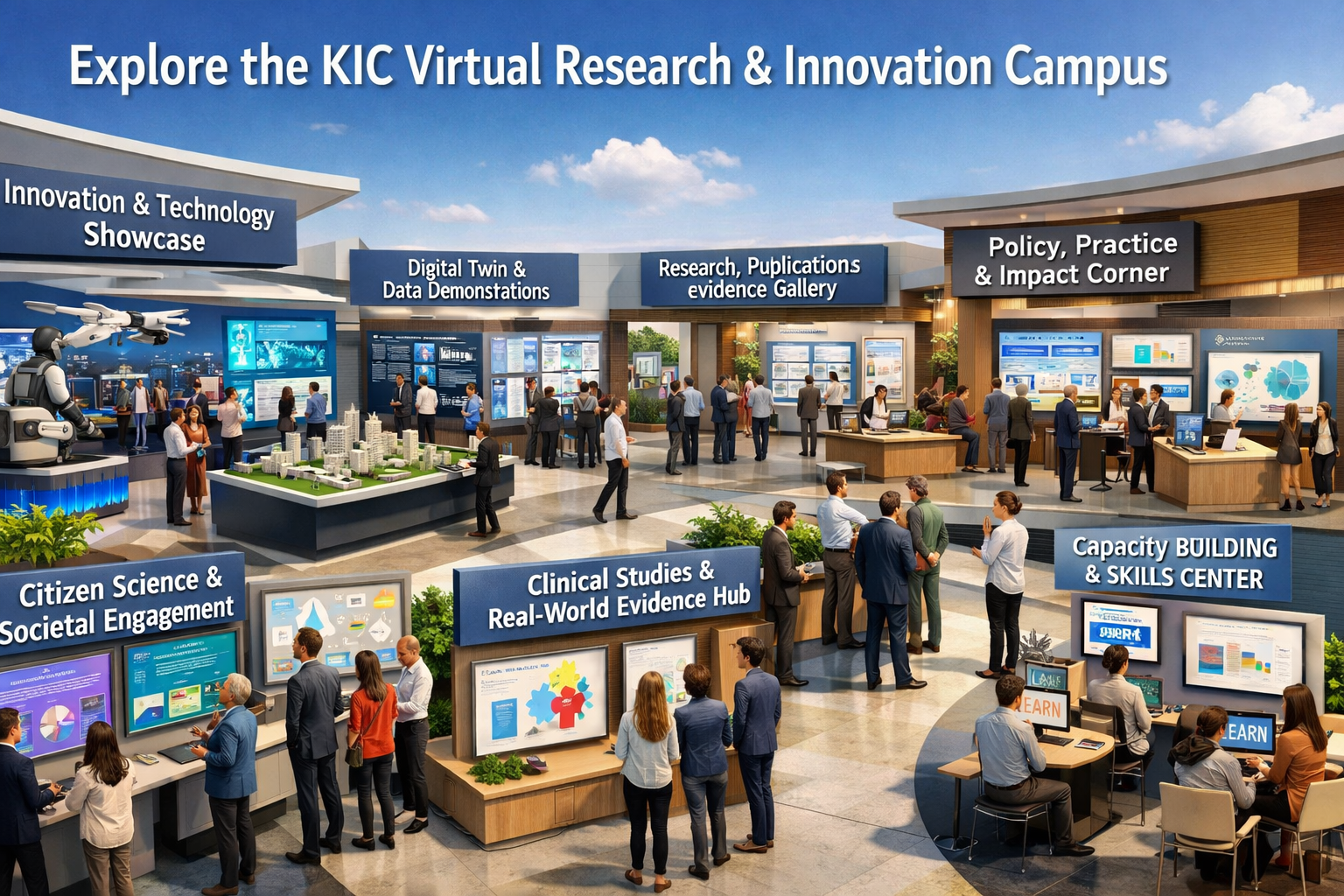
We warmly invite you to join the KIC virtual community, explore the thematic spaces of the KIC Virtual Research and Innovation Campus, and contribute to shaping a living ecosystem that extends well beyond mere publications toward translated, real-world impact.
This community is open to all, and your presence and contribution matter. Get your free ticket, join the KIC Community Meetings and Virtual Ecosystem, and get in touch with colleagues and partners who share your commitment to science with real-world impact.
|
As Executive Director of the Kinesis Innovation Center, and following closely the evolving EU data agenda, I am proud, though humbly, to share my first paper "Physical Activity and Healthy Ageing & Longevity Data: Interoperability, Reuse, and Innovation in a Federated European Context", offered here first to this community. The paper reflects the same convictions that underpin the KIC mission: that research on Physical Activity and Healthy Ageing & Longevity (PA and HAL) must evolve in a way that is interoperable, reusable, and innovation-ready, embedded within a federated European ecosystem. It highlights the need for structured metadata, semantic consistency, and machine-actionable provenance to transform distributed PA and HAL datasets into first-class research objects, enabling reproducible science, policy translation, and scalable real-world impact — and ultimately, to open new pathways for data-driven innovation that serves both science and society.
|
A significant part of my work within the GSS and my involvement with COST Actions focuses on stakeholder engagement and science-to-policy translation, connecting COST Actions with EU policymakers, regulatory bodies, and strategic partners, and organising focused discussions around stakeholder engagement and policy impact.
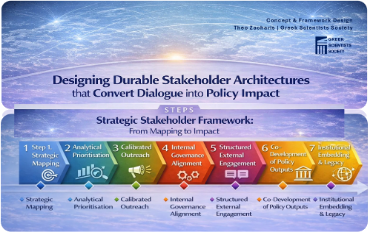
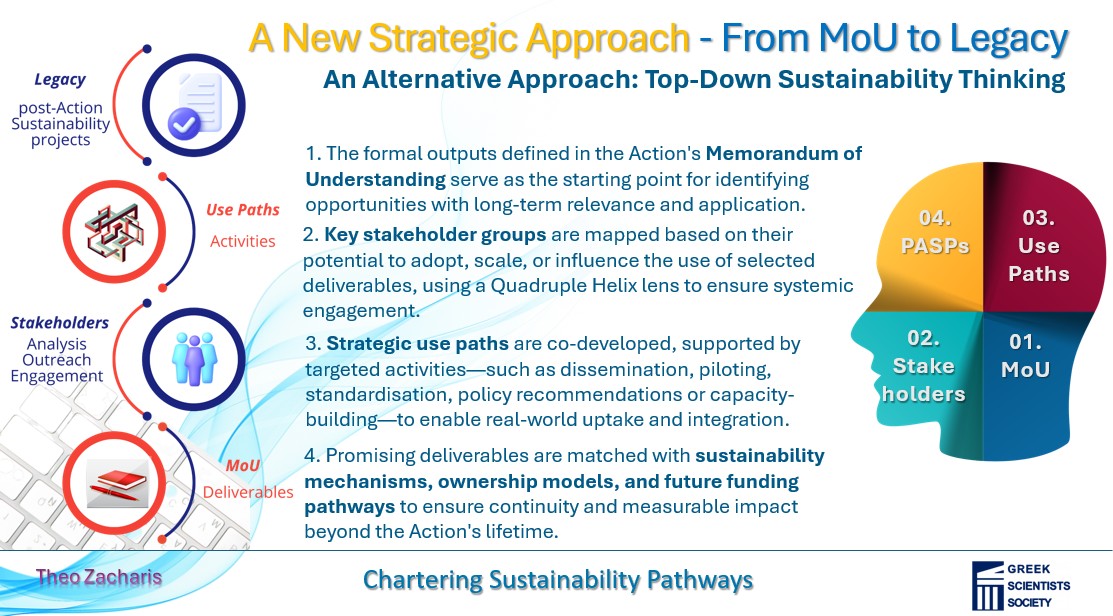
In this context, I am pleased to draw your attention to a strategic framework I have been developing and applying across COST, a strategic stakeholder model designed to move research networks from dissemination toward structured policy translation, regulatory relevance, and long-term institutional impact. A New Strategic Approach — from MoU to Legacy.
|
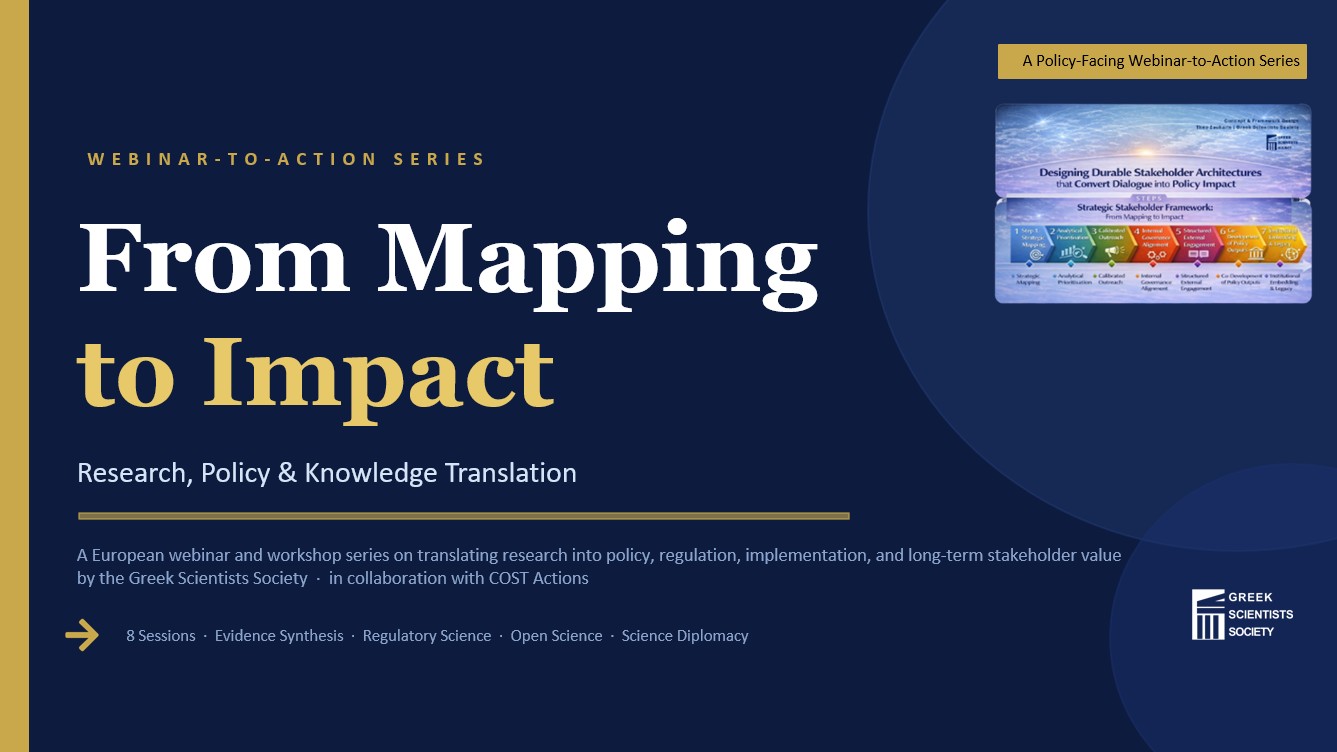
Building on this, I would like to personally invite you to the inaugural session of our webinar-to-action series, From Mapping to Impact: Research, Policy and Knowledge Translation, launching on 28 May 2026. The series brings together research communities, stakeholder task forces, innovation actors, and emerging leaders around a shared ambition: not only to communicate science, but to convert it into policy-ready outputs, regulatory relevance, and institutional alliances.
The series aims to build capacity among scientists, stakeholder task forces, and emerging leaders to understand not only how to communicate science, but how to convert it into policy-ready outputs, regulatory relevance, institutional alliances, and sustained follow-up pathways, engaging meaningfully with policymakers, regulators, and strategic partners, and translating research into real-world uptake and lasting institutional impact.
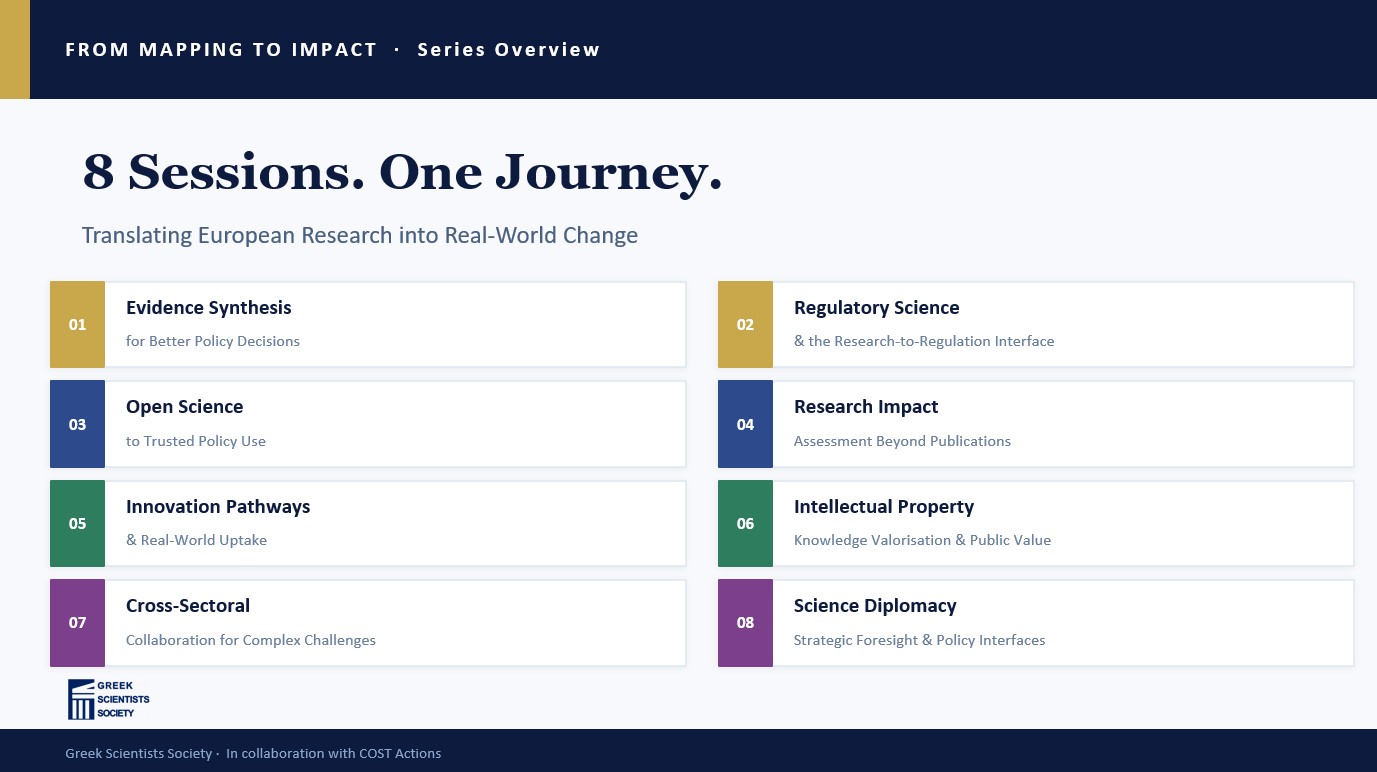
Sessions cover evidence synthesis, regulatory science, open science and FAIR data, research impact beyond publications, innovation pathways and real-world uptake, knowledge valorisation, cross-sectoral collaboration, and science diplomacy — with full details shared below.
If your COST Action Stakeholder Task Force is interested in joining Session 1, I would be glad to keep you in the loop and explore how your Action can be part of this growing initiative. Full details are shared below. |
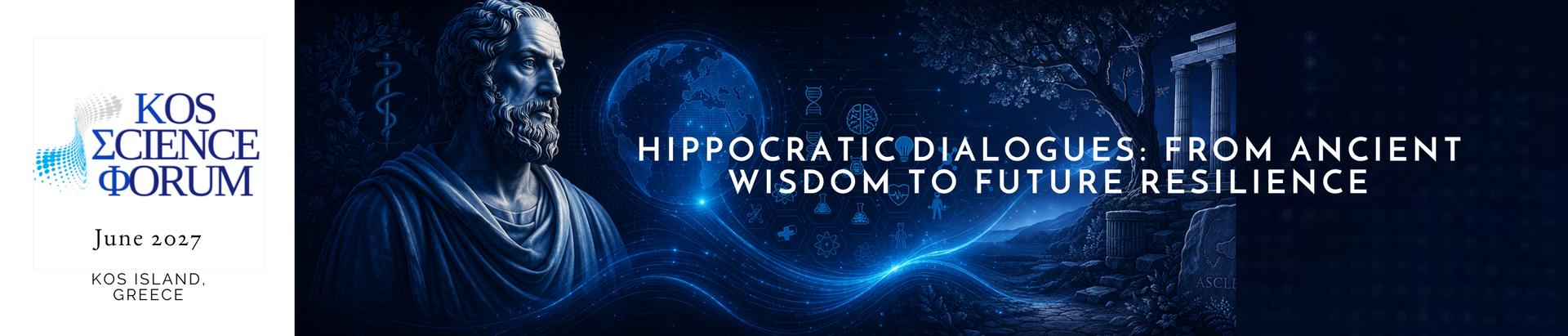
Speaking of science diplomacy, all of the above activities, from knowledge translation and stakeholder engagement to research impact and policy dialogue, can ultimately find a natural home within the Κos Σcience Φorum (ΚΣΦ), titled "Hippocratic Dialogues: From Ancient Wisdom to Future Resilience".
A flagship initiative of the Greek Scientists Society, ΚΣΦ is positioned as a high-level platform for science-driven dialogue at the intersection of research, ethics, policy, and society. Rooted in Hippocratic and Hellenic intellectual heritage and oriented toward future resilience, innovation, and science diplomacy, it engages both expert and wider societal audiences, with COST Actions forming an integral part of its scientific backbone, community, and thematic architecture.
We are building this as the long-term space where science, diplomacy, and societal impact converge, and we look forward to sharing more as we advance toward the inaugural edition in June 2027. |
On a related note, the GSS and KIC will be participating in the EIC Summit 2026, the European Innovation Council's flagship annual event connecting the deep-tech community with EU research and innovation policy.
If you are attending or are interested in exploring partnership opportunities for grant applications, whether with the Greek Scientists Society or the Kinesis Innovation Center, we would be very glad to connect. |
|
|
1st Kinesis Innovation Center Community Meeting
|
On 27 February, we held the 1st KIC Community Meeting on our community platform, bringing together researchers, clinicians, data experts, policymakers, and industry actors for a 90-minute discussion-driven session around Physical Activity and Healthy Ageing & Longevity. Rather than a traditional webinar, the meeting was designed around focused dialogue, thematic exchange, and purposeful networking — connecting science, clinical evidence, data, policy, and grant opportunities in a format that values conversation over slides.
The session was framed by trigger presentations establishing a shared conceptual and translational foundation, complemented by focused expert interventions. A substantial part of the meeting was dedicated to interactive discussion, centred on mapping community assets, identifying gaps and needs for competitive grant applications, prioritising funding opportunities, and exploring pathways from theory to data, clinical evidence, policy, and practice.
Participants could also engage through structured discussion groups, 1:1 exchanges, and open collaboration spaces within the KIC Virtual Research and Innovation Campus, with networking available before, during, and after the live session.
We were privileged to host distinguished colleagues from across Europe, and the quality of the exchange confirmed what we have long believed: that there is a real and growing community around PA and HAL, ready to collaborate, ready to translate, and ready to build something lasting together. Two presentation highlights from the meeting are shared below, and I would encourage you to watch them both. |
|
|
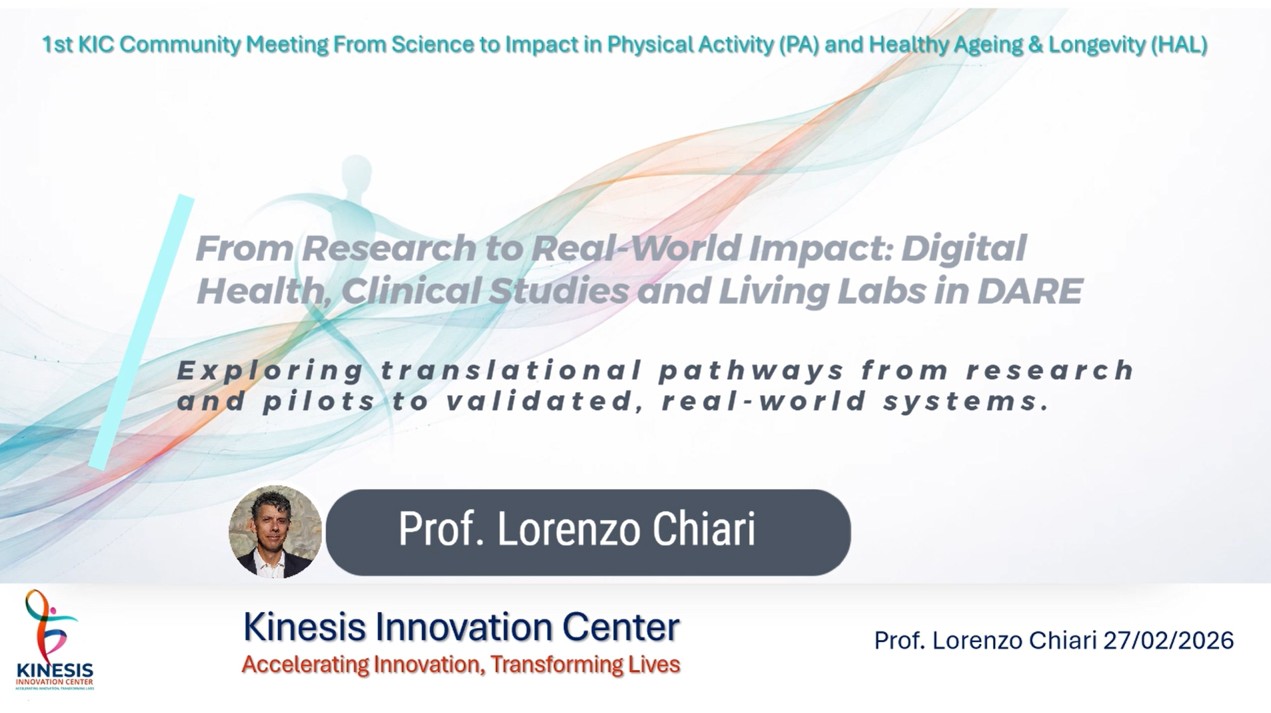
We were privileged to host Prof. Lorenzo Chiari, Professor of Biomedical Engineering at Alma Mater Studiorum, University of Bologna and President of the DARE Foundation, who presented the Italian national flagship initiative DARE, Digital Lifelong Prevention, a four-year public-private partnership funded under the Next Generation EU framework.
|
Prof. Chiari made a compelling case for prevention as a strategic paradigm shift, noting that despite growing recognition at European and international policy levels, current investment in prevention represents only around 6% of total health expenditure. His presentation demonstrated how structured digital infrastructures, data valorisation, and translational pathways — spanning over 27 core partners, more than 70 ongoing pilot experiences, and over 2 million individuals involved in data collection — can support sustainable healthcare systems and advance healthy ageing strategies in a concrete, measurable way.
His contribution resonates deeply with the KIC mission, and we are actively exploring a strategic collaboration with the DARE Foundation, one that we believe will create lasting value for everyone engaged in this ecosystem.
[Read the full post on the KIC website — link]
[Watch Prof. Chiari's presentation — by clicking the image below] |
In Theo's opening presentation, From Community Assets to Collective Impact: The KIC Strategy at the Science-Data-Policy-Clinical Interface, we framed how datasets, studies, expertise, and networks can be mobilised into coordinated, impact-oriented initiatives. The presentation introduced the KIC strategy and vision, and set the stage for the thematic discussions and collaborative exchanges that followed. |
|
|
The presentation introduced the KIC strategy and vision, and set the stage for the thematic discussions and collaborative exchanges that followed. |
| |
|
We warmly invite you to join the KIC Community, explore the thematic spaces of the KIC Virtual Research and Innovation Campus, and become part of a living ecosystem that extends well beyond a single event.
Whether you are a researcher, clinician, data expert, policymaker, or industry actor, there is a space for you here. And even if Physical Activity and Healthy Ageing and Longevity are not your primary field, you are warmly welcome to join and engage across our thematic groups covering grant applications, data, publications, clinical studies, policy, and cross-sectoral collaboration. |
The KIC Community platform remains open and registrations are welcome at any time. Join us, explore the virtual campus, and connect with a growing European community built around continuity, openness, and real-world impact. Get your free ticket, connect with colleagues and partners, and help shape a platform where science meets application.
|
My First Publication · ORE Paper |
Physical Activity (PA) and Healthy Ageing and Longevity Data (HAL): Interoperability, Reuse, and Innovation in a Federated European Context
|
I am pleased to share my first publication, offered here first to this community. This paper sits at the intersection of two things I care deeply about: the science of physical activity and healthy ageing, and the European data agenda that will determine whether that science can actually be reused, federated, and translated into real-world impact.
The paper asks a deceptively simple question: why, despite a rapidly growing body of PA and HAL research across Europe, does so much of it remain difficult to find, compare, and reuse across studies, countries, and infrastructures? The answer, as the paper argues, is not data scarcity. Europe has over 224,000 publications, nearly 9,500 clinical trial registrations across EU-27 countries, and close to 49,000 patent records in this field. The bottleneck is the absence of consistent cataloguing, shared taxonomies, and machine-actionable metadata that would make distributed PA and HAL datasets genuinely interoperable, federated, and AI-ready within the evolving European Health Data Space (EHDS) and Open Science Cloud (EOSC).
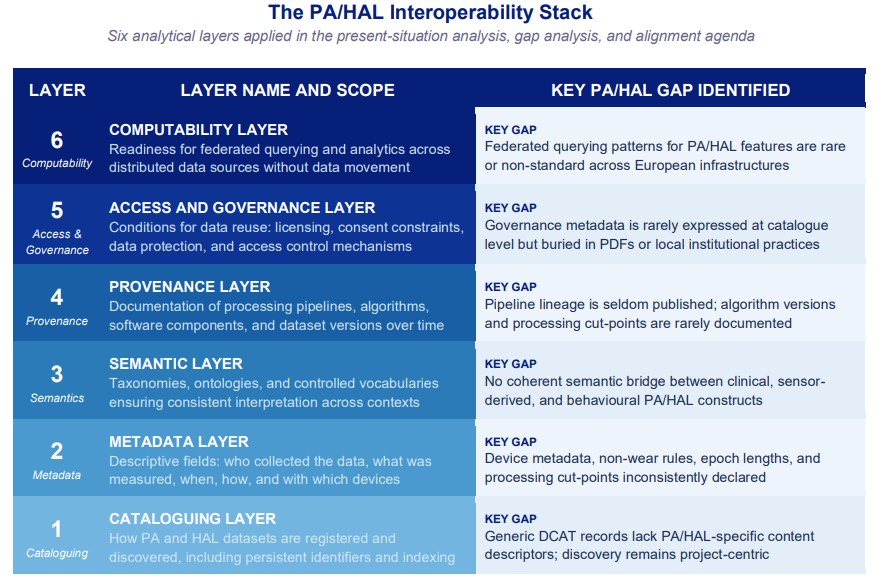
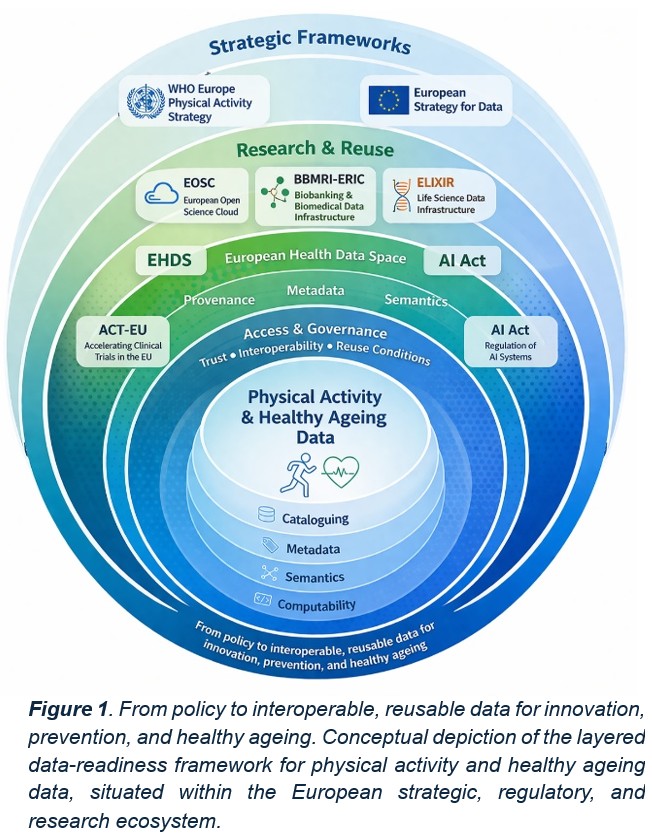
The paper introduces a six-layer interoperability stack, covering cataloguing, metadata, semantics, provenance, access and governance, and computability, and applies it to current PA and HAL data practices across Europe to identify where the gaps lie and what a practical alignment agenda looks like.
The paper proposes a concrete alignment agenda for making PA and HAL data EHDS-compatible and Open Science-ready, using existing European components rather than creating new infrastructures. It is intended as a reusable reference for researchers, data stewards, research infrastructures, and policy actors working at the science-data-policy interface — which is precisely the community we are building within KIC. |
|
|
|
Figure 1 captures this vision in a single image. It shows PA and HAL data at the centre, surrounded by the layered requirements for interoperability, all situated within the broader European strategic and regulatory ecosystem spanning the EHDS, the AI Act, EOSC, BBMRI-ERIC, ELIXIR, and the WHO Europe Physical Activity Strategy. It is, in essence, a map of what needs to connect for federated, innovation-ready PA and HAL science to become reality.
|
|
|
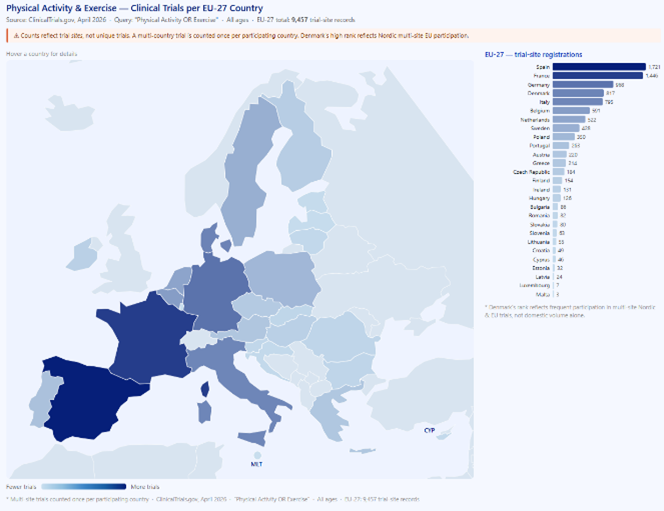
One of the most striking findings in the paper is captured in the EU-27 clinical trials map below. Across 27 member states, there are 9,457 trial-site registrations involving physical activity or exercise, with Spain, France, and Germany alone accounting for 43% of EU-27 activity. This is a remarkable volume of research — yet much of it remains siloed, with PA variables described inconsistently across studies, limiting cross-site comparison, federated real-world evidence generation, and ultimately, translation into policy and practice.
|
The paper proposes a concrete alignment agenda for making PA and HAL data EHDS-compatible and Open Science-ready, using existing European components rather than creating new infrastructures. It is intended as a reusable reference for researchers, data stewards, research infrastructures, and policy actors working at the science-data-policy interface — which is precisely the community we are building within KIC. |
COST Actions Strategic Framework · Open Invitation |
From Mapping to Impact is a strategic stakeholder framework designed for all COST Actions, built around a new approach to sustainability thinking - From MoU to Legacy. |
The series is grounded in the From Mapping to Impact: A Strategic Stakeholder Framework, a model designed specifically for COST Actions introducing a seven-step architecture that moves research networks from ad hoc dissemination toward structured, sustained policy interfaces. Starting from the Action's Memorandum of Understanding, the framework maps key stakeholder groups, co-develops strategic use paths, and builds toward institutional embedding and long-term legacy. The guiding principle is simple but transformative: from MoU to Legacy.
"From scientific knowledge to policy relevance, regulatory usability, and societal uptake." |
The webinar-to-action series translates this framework into eight structured sessions, each combining a short conceptual framing with concrete use cases drawn from participating COST Actions, followed by moderated discussion and audience interaction. Sessions are designed to be opened or endorsed by representatives from relevant European institutions, including European Commission services, Members of the European Parliament, national ministries, agencies, and think tanks.
Beyond the series, each thematic session seeds a dedicated sub-series, co-developed with the COST Actions active in that field, and can be deployed eventually around applied formats including Policy Sandbox Sessions, Technology Transfer Clinics, Speed Dating for Science, Young Researcher Lightning Talks, Showcase of Innovators, and Digital Twin Demonstrations that will be part of the KSF see below |
Session 1, The Framework: From Mapping to Impact, takes place on 28 May 2026, 10:00 AM to 13:30 PM CEST and is now open for registration. Whether you are a researcher, policymaker, innovator, or emerging leader, you are warmly welcome to join. Register for free and be part of a growing European conversation on translating research into real-world policy impact. |
For COST Action members, and in particular Stakeholder Task Force members, this is a personal invitation to engage.
Should your Action be interested in joining Session 1, The Framework: From Mapping to Impact, please let us know and we would be happy to keep you in the loop.
The session opens with a presentation and a use case of the overall approach, and then moves into Action-specific breakout room discussions, giving participants the space to reflect on how elements of the framework can be adapted to their own Action's context, stakeholder landscape, and policy goals. |
|
|
Host Your Event on Our Platform · With Our Compliments | |
|
Please do keep in mind that the GSS event platform is open to host any capacity building activity, virtual event, or community session organised by COST Actions, entirely with our compliments.
|
|
|
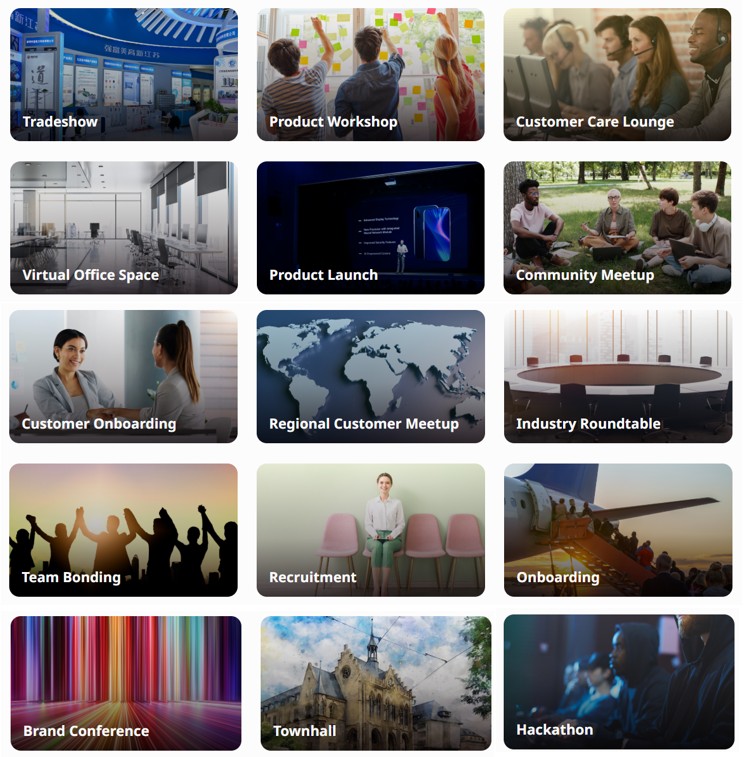
The platform offers advanced networking capabilities, creating a unique opportunity for researchers and the scientific community to exchange ideas as equals, sitting at the same table with policymakers, regulators, innovators, and stakeholder representatives. For an overview of the formats the platform supports, please see the image below. |
| |
|
Κos Σcience Φorum (ΚΣΦ) · Call for Strategic Partners |
Hippocratic Dialogues: From Ancient Wisdom to Future Resilience |
As outlined in the opening message, all of the work described above, from knowledge translation and stakeholder engagement to federated data, policy dialogue, and innovation pathways, finds its broader strategic home within the Κos Σcience Φorum (ΚΣΦ). The Forum is advancing steadily, and we are now actively inviting organisations to engage as strategic intent partners around its core global megathemes. As a high-level platform for science-driven dialogue at the intersection of research, ethics, policy, and society, ΚΣΦ offers organisations a meaningful and structured way to position themselves within a European and international science diplomacy agenda.
|
|
|
The Forum is organised around seven global megathemes, each offering organisations a concrete entry point for engagement as a strategic intent partner: A · Global Governance of Emerging Technologies B · Climate, Oceans, Environment and Planetary Resilience C · Open Science and Equitable Knowledge Systems D · Science for Peace, Humanitarian Diplomacy and Crisis Response E · Innovation Ecosystems and Global Competitiveness F · Capacity Building and Professionalisation of Science Diplomacy G · Institutional, Economic, Cultural and Strategic Diplomacies
If your organisation works at the intersection of any of these megathemes and wishes to explore a strategic partnership with the Κos Σcience Φorum, we would be very glad to hear from you. |
|
|
Ready to Apply for a Grant application? |
Let’s Build Proposals Together |
As we entered the last two years of FP9 HORIZON and EU programmes funding, it's the perfect time to begin shaping collaborative, high-impact proposals.
The GSS Gateway is your personalised entry point to EU funding, and strategic collaboration opportunities. Designed for members of the Greek Scientists Society, the Gateway is open to anyone and helps researchers and organisations navigate open calls, build consortia, and align with European priorities. Whether you're seeking funding, partners, or post-project sustainability, the GSS Gateway connects ideas with opportunities. |
How to Search in the GSS Gateway |
Welcome to the Greek Scientists Society EU Science Funding Gateway, the free-accessible portal to search for EU Programmes calls. What makes the GSS EU Programmes Gateway truly unique is its user-friendly features designed to empower researchers and organisations: -
Filter by Scientific Field: Tailor your search to specific areas of expertise, saving you valuable time.
- Access Historical Data: Explore over 5,000 calls categorised by thematic area and beneficiary type, including archived programmes for comprehensive insights.
-
Stay Ahead: Discover opportunities that align with your research goals and organisational needs.
|
By leveraging this resource, we can unite our community’s strengths, amplify our collective impact, and contribute to the creation of sustainable, forward-looking solutions at a European level that benefit all. Together, we can lead the way in transforming ideas into actions and building a stronger, more connected scientific ecosystem.
|
If you find a call of interest, simply click the “Do you wish to explore partnerships with our Non-Profit Organisation?” button and email us with your proposal. We would be delighted to partner and actively participate in the grant-writing process at no additional cost.
Let’s transform ideas into impactful collaborations! |
|
|
Do you wish to Partner or Support the Greek Scientists Society initiative as a Partner or a Volunteer? |
The Greek Scientists Society (GSS) actively welcomes strategic partnerships and targeted volunteering with institutions, networks, and individuals who share a commitment to science with societal impact.
In particular, we are keen to collaborate with: - COST Actions seeking pathways for post-Action sustainability, knowledge translation, and broader societal engagement
-
Universities, research centres, and academies interested in science–policy dialogue, science diplomacy, and interdisciplinary collaboration
- Public institutions, foundations, and innovation actors wishing to connect research with policy, innovation, and real-world implementation
Partnerships may take the form of co-designed initiatives, thematic collaborations, joint events, advisory roles, or contribution to platforms such as the Kos Σcience Φorum and the Kinesis Innovation Center.
We are open to sharing our event and community platform with partners who are considering the organisation of this initiative, or other hybrid or online events of strong scientific relevance and stakeholder impact — including, for example, training schools, structured engagement with policymakers, social partners, or other relevant stakeholder groups. In such cases, we would be pleased to support these initiatives by offering access to our community event platform, with our compliments, as part of a shared commitment to openness, collaboration, and societal impact. We also welcome individual contributions, particularly from scientists and professionals interested in supporting: - science–policy and science-diplomacy activities
-
strategic coordination and operations
- community building across European and international networks
These opportunities are designed to foster continuity, openness, and shared ownership, ensuring that scientific knowledge and collaboration extend beyond projects into lasting societal value.
If you are interested in partnering with or supporting the work of the Greek Scientists Society, we would be pleased to hear from you. |
Seeking for a Science Affairs & Strategic Operations Officer |
We are seeking a Science Affairs & Programmes Officer to support our initiatives. The ideal candidate will have – or be eager to develop – experience in grant coordination, programme administration, and strategic support in all scientific and policy affairs.
Interested in the position? please email to |
We are always open to hearing from you and would like to know your thoughts. We encourage you to contact us with any suggestion, complaint or request you may have.
Thank you so much for being a part of the Greek Scientists Society, the Kinesis Innovation Center as well as my COST network. Theo Zacharis - the GSS team |
Mesogeion 169, Athens Greece 151 26 contact@greek-scientists-society.com |
|
|
|